
One of Ireland’s first Cistercian abbeys, it was also one of the largest abbeys in Leinster. It is located in the picturesque valley of the River Inny in Abbeyshrule village. The ruins are open to the public.
In 1150, Abbeyshrule Cistercian Abbey, or the ‘Abbey of Shrule’, was founded by the Cistercians from Mellifont Abbey under the patronage of the O’Farrells of Annaly. There may, however, have been an earlier Christian foundation on this site. It was dedicated to the Blessed Virgin Mary around 1150. Rectangular in structure, it housed a chapel, sacristy, kitchens, pantry and refectory. Its location on the banks of the River Inny allows for easy access to Lough Ree, Clonmacnoise and the town of Kilbixy.
In 1228, its affiliation changed to Bective Abbey.
The abbey flourished until it was burned by an invading English army in 1476. It was later restored but was suppressed in 1541 by Henry VIII. It was then leased to a succession of English settlers until 1595, when Red Hugh O’Donnell marched through Annaly and destroyed all properties occupied by the English.
In 1569, Queen Elizabeth I granted the abbey to Sir Robert Dillon, Chief Justice of the Common Pleas, which was one of the four courts of Ireland.
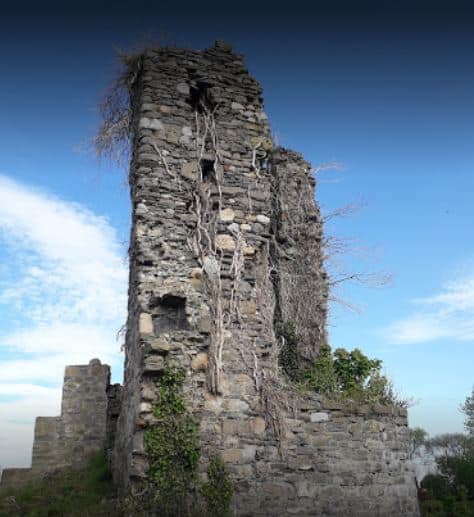
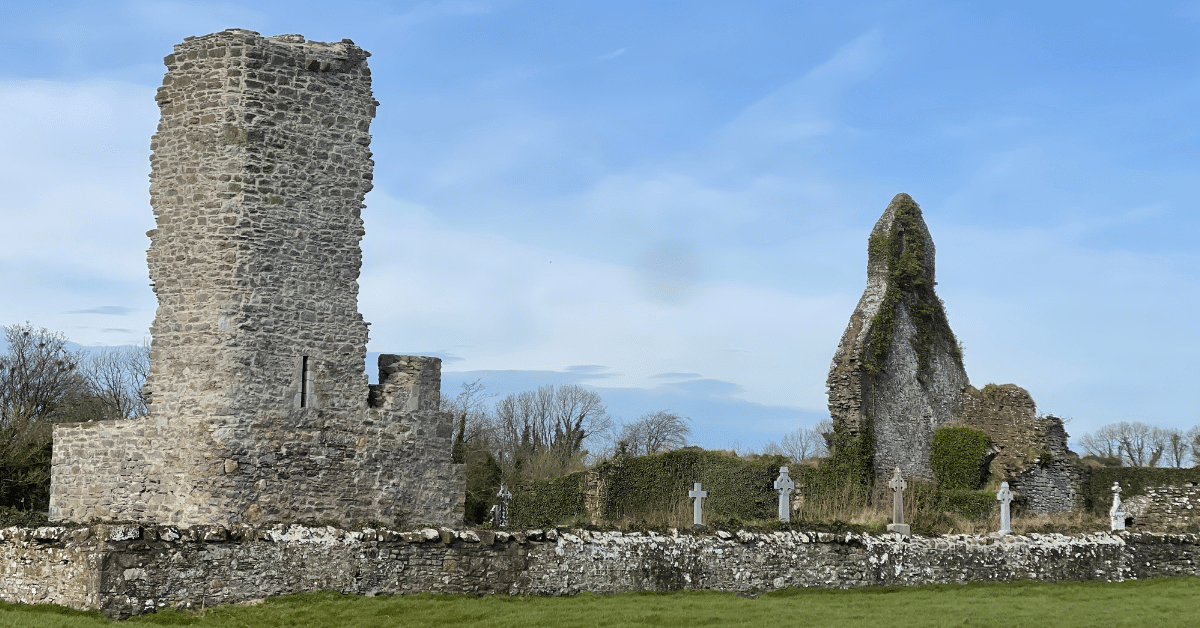
The ruins of the abbey consist of the church, the outline of the cloister garth and a later tower house to the south-east. The church shows three major phases of construction and change, beginning with the original 13th-century aisle-less church.
The structure of the ruins shows the impact of the abbey’s change of fortunes and ownership. Sections of the 13th-century church walls remain extant, particularly the east and north walls. The crossing arch beneath the distinctive double bellcote also remains intact.
Further modifications took place in the 15th or 16th century, reducing the size of the chapel.
In the 17th or 18th century, walls were inserted in the original chancel area to the east. This modified the space into a smaller parish chapel.
The graveyard has several interesting historic gravestones and the shaft of a high cross.
The four-storey tower house is located approximately 30 metres from the abbey church in the south-east corner of the cloister area. The upper floors were accessed by a stone spiral staircase, leading onto mural passages within the thickness of the walls. The tower house was likely built after the dissolution of the monasteries and probably dates to the late 16th century.